How Astellas’ CFO weighs cash management, leadership and ‘nomikai’ culture
Astellas is one of Japan’s largest drugmakers, generating more than ¥1 trillion in revenue in the first half of FY2025, or roughly $6.4 billion. Its global footprint spans the United States, Europe and Asia, placing ongoing pressure on finance to support growth, manage volatility and guide long-term strategy.
Its CFO Atsushi Kitamura brings a unique cross-industry background to the organization, with experience in consumer goods, logistics, restaurants and technology. Since joining Astellas in late 2023, he has focused on strengthening the balance sheet, improving cash productivity and deepening collaboration across the business as the company prepares for an important period of transition.
Kitamura also sees cultural shifts shaping how teams work. He spoke about the decline of nomikai, Japan’s long-standing tradition of after-work drinking and socializing with colleagues, and how younger employees are redefining communication and connection. In a recent interview with CFO.com, he shares his views on technology ROI, leadership during uncertainty and the evolving expectations facing today’s finance teams.
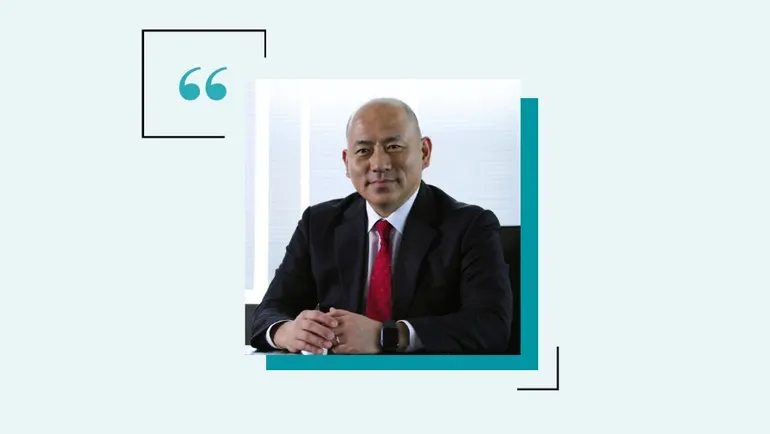
Atsushi Kitamura

Permission granted by Atsushi Kitamura
CFO, Astellas
First CFO position: 2016
Notable previous employers:
- Pioneer Corporation
- Skylark
- TNT Express
- Procter & Gamble
This interview has been edited for brevity and clarity.
ADAM ZAKI: Your company has gone through acquisitions and other changes. How do you keep your team motivated during uncertainty, whether it is a deal, economic pressure or market disruption?
ATSUSHI KITAMURA: I am still learning. But a few things stand out.
In uncertainty, we need to focus on what we can control. I cannot control exchange rates or geopolitical risks. But if the environment is volatile, we can increase flexibility. We can build more buffers into operations. We can optimize costs. If the downside never comes, then we will enjoy better results. But if something does happen, we are prepared. So, I may put more stretch into targets and ask the team to generate more ideas to create that buffer. That is something we can control.
Second, clarity and communication are critical. People struggle when communication is unclear or when visibility is low.
In pharma, cash flow is relatively strong, but risk is also very high because science is science. Success rates [in R&D] are low. When you have a good asset, cash flow for several years is predictable, but then the loss of exclusivity comes. That is the cycle.
In our case, we are facing a major loss of exclusivity on a large asset, so we need to transform. My job as CFO is to provide great visibility across several scenarios. If one scenario happens, here is what we will see. If another happens, here is what the impact will be. And in each scenario, here are the backups. It’s not the end of the game in any scenario.
By showing scenarios, showing preparation and giving transparency, we create psychological safety. People can see that we are not just reacting — we are preparing and making progress. That helps motivation during uncertainty.
Pharma is notoriously capital-intensive, focused heavily on R&D and requires great capital allocation on your part. Are there any unique considerations in your planning for next year, and how are you preparing finance to support major decisions in 2026?
The priority is to invest in future growth like technology, R&D and also business development and licensing when needed. The second priority is a sustainable return to shareholders through stable dividend growth. And third, whenever we have surplus cash, we return it immediately through share buybacks. These priorities remain the same.
“The difficult work starts now. This year and next year are about preparing for real execution of [our] transformation.”

Atsushi Kitamura
CFO, Astellas
However, two and a half years ago, just before I joined, Astellas made a major acquisition which was a $6 billion transaction. Before that acquisition, we were in a net cash position. After the acquisition, we shifted to a net debt position. So strengthening the balance sheet became a major priority.
One reason I was asked to join was to improve the balance sheet. So while the capital allocation framework is unchanged, we must accelerate debt reduction. That requires a strong focus on cash productivity.
I come from industries where cash discipline is essential. I’ve worked in businesses with difficult economics, high volatility and limited margin for error. During COVID, cash management was a daily struggle. That experience shaped how I approach finance today.
At Astellas, we are focusing on cash productivity, working capital improvement and optimizing cash on hand. Historically, we had large cash balances, but now with debt, we need to rebalance, reduce excess cash, free up working capital and pay down debt. That also means increasing profitability to reduce leverage.
Finance plays a leadership role here. We are restructuring cash pooling, improving short-term and long-term borrowing structures and working closely with the supply chain to reduce inventory and extend payment terms where appropriate. These are important levers to free up cash.
The progress has been strong. Two years ago, our gross leverage ratio, interest-bearing debt divided by EBITDA, was 3.4. Last year it fell to 2.2. And after the first half of this year, it is around 1.6. So, we are strengthening the balance sheet steadily. This is an example of finance contributing directly to the company’s performance.
Looking ahead to 2026, is there an area of the business where you want finance to collaborate more closely than it did in 2025?
Yes. We just finished two very intensive weeks of cross-functional face-to-face sessions in Tokyo, and we will do another in early next year. These sessions make it clear to our team that communication and relationships are becoming even more important, especially as we enter next year.
We are accelerating our transformation because one of our major assets will face a loss of exclusivity. I have been at Astellas for two years, and during this period, we have seen recovery, revenue is regrowing, profit margin is improving and the overall trend is positive. With that, the difficult work starts now. This year and next year are about preparing for the real execution of that transformation.
During execution, collaboration must be much tighter. Even if we make a great plan, we still have to deal with volatility. Some parts of the plan will go well, others will not. We will need constant assessment, timely judgment, clear communication and sometimes delegation. But we also need appropriate control over risk tolerance levels and progress.
So, in 2026, finance must work even more closely with every major function, R&D, commercial, supply chain and strategy, watching the progress of the transformation together and adjusting quickly when the environment shifts.
You’ve worked across several industries, which is a bit unique nowadays. Was that intentional, and how has that breadth of experience helped you?
It is a tricky question because the truth is, it was not a planned path. It was a coincidence. I never chose a job because of the industry. I chose roles based on two criteria: Can I contribute to making the business better, and can I learn and develop myself as a business professional?
So, the variety in industries was not intentional; it was just the result of following those two criteria.
But I did learn a lot from the differences. For example, P&G is a consumer goods company driven by marketing. The consumer is at the center of everything. It has strong R&D, marketing, supply chain and go-to-market capabilities. Finance is highly engaged across all of it. It is a very complex business with many levers.
In global logistics or in a restaurant chain with 3,000 locations, the business is more about infrastructure, efficiency, scalability, day-to-day execution and KPIs. How fast do we serve customers? What is the turnover of seats? It is about operational efficiency.
Then, at Pioneer, that was a technology company shifting from hardware like audio speakers and TVs toward service businesses like navigation systems. That is all about innovation, building technology capabilities layer by layer to provide better service six months later, then six months after that.
So each industry taught me something different. Even though it was not intentional, the diversity gave me a broader view of how different business models work.
In the U.S., participation in after-work events like happy hours and holiday parties has declined, especially among younger workers. In Japan, there is the tradition of nomikai. Did nomikai play a role in your own career development, and must younger workers in Japan still value this tradition today?
This is a very interesting and timely question. Nomikai, the after-work socializing, has become much less popular in Japan.
“I want communication to happen during working hours, in an organized way, not based on social pressure after work. Technology enables this.”
Atsushi Kitamura
CFO, Astellas
Japan once had a strong lifetime employment culture, where people joined a company and stayed for decades. But that era is gone. I do not remember the exact number, but roughly 30% of new college graduates leave their first company within two or three years. So, younger generations do not stay with one company for life the way older generations often did. They prioritize their own lifestyle, which makes complete sense.
Because of that shift, if I invite people out for drinks after work, I hesitate. I already know many will not want to go, and I need to respect that. Socializing after work is simply not as common.
At the same time, some young people are very ambitious and want to grow quickly. I want to support them, but instead of relying on after-work socializing, I now focus on creating opportunities during business hours, and technology makes this possible.
I regularly hold town halls and roundtable sessions, sometimes twice a month, in different formats. And these are not only for employees in Japan; we include employees all over the world. These sessions allow me to talk directly with people, understand their concerns, hear what help they need and share what is happening in the business.
When I was younger, the only way to speak openly with a more senior person might have been at a nomikai. For example, in Japan, we have a concept called “ho-ren-so”. This means reporting, informing and consulting with your boss, which in practice sometimes happened over drinks. That was a mainstream communication channel.
Today, I want to eliminate that barrier. I want communication to happen during working hours, in an organized way, not based on social pressure after work. Technology enables this. It lets us increase touchpoints without expecting people to sacrifice their personal time.
So, the culture has changed. Socializing after work is less common and lifetime employment is less common. But communication and support can still be strong, just in a different form.
link