Understanding the Curing Process: 6 Facts About Reliant Powder Curing Ovens
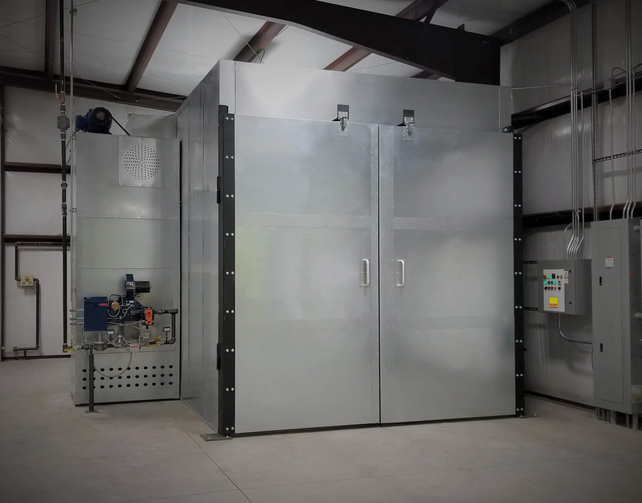
Curing is where a powder-coated part develops the hardness, adhesion, and finish expected from the product. Heat has to reach the metal itself and stay there long enough for the coating chemistry to complete its reaction. Reliable oven performance helps manufacturers keep that process repeatable across changing loads and production schedules.
Part-Metal Temperature Matters More Than the Air Reading
Oven controllers show chamber temperature, but the coated part can remain cooler for minutes after entering the heat zone. Thick steel, castings, and dense weldments absorb heat more slowly than light sheet metal, so the cure clock should follow the powder manufacturer’s requirements for metal temperature.
Temperature profiling gives operators a picture of when the slowest-heating area reaches the required range. Controlled heating in Reliant powder curing ovens can reduce undercure, repeated cycles, and avoidable rework.
Accurate profiles also improve scheduling because supervisors can estimate realistic dwell times for common products. Better timing keeps racks moving and helps the powder coating booth feed the oven at a manageable pace.
Heat Uniformity Has a Direct Effect on Finish Consistency
Balanced airflow helps heated air reach the front, back, top, bottom, and center of a loaded chamber. Poor circulation can leave cooler pockets around large panels, closely packed racks, or irregular assemblies even when the average oven temperature appears correct.
Circulation fans, baffles, duct paths, and rack placement all influence that heat pattern. Properly sized Reliant powder coating ovens can help manufacturers maintain a repeatable curing environment around the parts the shop produces most often.
Consistent temperatures give quality teams fewer variables to chase when gloss, hardness, or adhesion begins to drift. Stable heat also improves labor and energy use because operators do not need to extend cycles simply to compensate for uncertainty.
Why Does Cure Time Change With Part Thickness?
Thin parts usually reach cure temperature quickly because there is less metal mass to heat. Dense plate, structural components, and thick welded joints can take much longer, even if both loads enter the same Reliant industrial powder coating oven at the same chamber setpoint.
Thermal mass affects more than total cycle length because each cold load pulls heat from the oven. Larger batches may increase recovery time, which means production planning should account for load weight as well as chamber dimensions.
Managers comparing a Reliant powder coating oven for sale can size capacity around real workloads instead of the largest part alone. Correct sizing helps avoid paying for unnecessary oven volume while still giving heavier products enough heat and time to cure properly.
Rack Spacing Can Change the Way Parts Cure
Crowded racks can block heated air from reaching certain surfaces, especially around broad panels, deep frames, or tightly nested components. More pieces per load may look productive at first, yet restricted airflow can lengthen curing or create uneven temperature across the batch.
Standardized spacing gives operators a repeatable loading pattern for high-volume products. A Reliant powder coating equipment package can help businesses coordinate rack dimensions, booth access, oven capacity, and material movement so parts are not packed differently every time production gets busy.
Documented rack layouts also make troubleshooting easier because the curing team can compare a problem load against a known setup. Clear loading rules reduce guesswork and help newer employees reproduce the same conditions used by experienced operators.
Application Quality and Curing Performance Work Together
Powder application sets the film thickness that the oven must cure, so spraying and heating should never be treated as unrelated steps. Excessive film build can require different attention than a properly controlled coating layer, while thin or uneven coverage may expose application problems that curing cannot correct.
Grounding, gun settings, booth airflow, and powder delivery all affect what enters the oven. Well-matched Reliant powder coating equipment can support application and curing stages planned around the same throughput, part size, and finish requirements.
Coordinated Reliant powder coating systems also help prevent one stage from outrunning another. Steady output keeps coated racks from sitting too long before cure and helps manufacturers plan labor, maintenance, and production around a smoother flow.
Process Records Turn Curing Into a Repeatable Production Step
Written records make it easier to repeat successful cure conditions across shifts and changing workloads. Part temperature, oven setpoint, dwell time, rack weight, powder type, and load arrangement can all provide useful context if finish performance changes later.
Historical data can also reveal gradual equipment issues such as slower recovery, longer heat-up times, or repeated temperature differences between chamber zones. Those patterns give maintenance teams a reason to inspect fans, seals, probes, burners, or airflow components before a small change becomes a production problem.
Finally, Reliant Finishing Systems provides Reliant powder coating equipment for manufacturers seeking better control over application and curing. Their oven, booth, and complete system options can help businesses match heat capacity, part-metal temperature, airflow, rack loading, and throughput so powder curing stays consistent instead of depending on trial and error, while giving production teams clearer information for scheduling maintenance and future capacity planning decisions.