


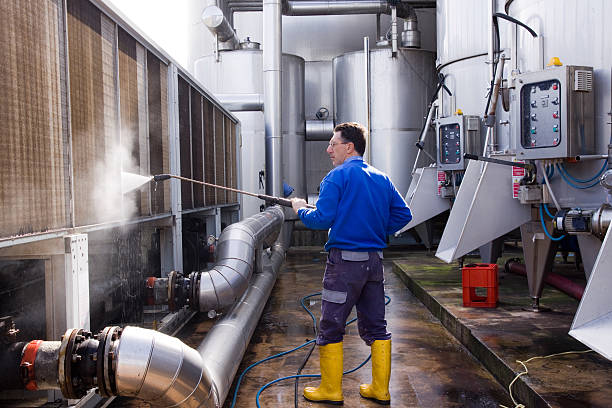
Janitorial services represent one of civilisation’s most essential yet persistently overlooked industries, a sector whose very invisibility testifies to its success. Like the sanitation workers of ancient Rome or the night soil collectors of medieval cities, today’s professional cleaning workforce performs tasks that society cannot function without yet prefers not to contemplate. The parallels are instructive, for they reveal a timeless truth: cleanliness is not merely aesthetic preference but foundational necessity.
Historical Precedents and Modern Realities
The professionalisation of cleaning services emerged from the same forces that transformed all labour in the industrial age: specialisation, standardisation, and the recognition that certain tasks require dedicated expertise. What once fell to individual servants or building occupants gradually evolved into an organised industry with its own technologies, methodologies, and professional standards.
This evolution was neither inevitable nor simple. It required the convergence of several factors: the proliferation of large commercial buildings that individual tenants could not maintain, the development of specialised cleaning equipment that demanded trained operators, and the growing understanding that workplace hygiene directly affected productivity and health outcomes. By the mid-20th century, professional janitorial companies had become fixtures of urban life, though their importance would only become fully apparent generations later.
The Scope of Modern Cleaning Operations
Contemporary janitorial service providers operate with a complexity that would astonish earlier generations. They manage supply chains, deploy sophisticated equipment, train personnel in chemical safety and infection control, and coordinate operations across multiple sites with military precision. The janitor with a mop and bucket has been succeeded by teams wielding arsenal of specialised tools and technical knowledge.
Consider the typical requirements of a modern commercial facility:
- Daily maintenance protocolscovering floors, surfaces, waste removal, and toilet facilities according to documented schedules and quality standards
- Periodic deep cleaningaddressing areas that require less frequent but more intensive attention, including carpet extraction, window cleaning, and hard floor restoration
- Specialised disinfectionparticularly relevant in healthcare, food service, and high-traffic public spaces where microbial control is paramount
- Environmental complianceensuring that cleaning methods and materials meet regulatory requirements for chemical use, waste disposal, and water consumption
- Emergency response capacityfor unexpected situations ranging from spills to post-event cleaning of large venues
The Singapore Model
Singapore offers a particularly instructive case study in the organisation and regulation of cleaning services. The city-state’s approach combines strict regulatory oversight with progressive efforts to professionalise the sector and improve conditions for workers. The National Environment Agency establishes mandatory standards for cleaning frequency and quality in various facility types, creating a baseline that elevates the entire industry.
Under Singapore’s Environmental Public Health Act, commercial buildings must maintain standards of cleanliness that meet prescribed criteria, with particular attention to toilet facilities, which are subject to regular inspection and public grading. This regulatory framework has fostered a culture where professional cleaning is viewed not as discretionary expense but as essential infrastructure.
Moreover, Singapore has pioneered efforts to professionalise janitorial work through the Progressive Wage Model, which links compensation to skills and productivity rather than treating all cleaning labour as interchangeable. This approach acknowledges what enlightened facility managers have long understood: quality cleaning requires trained, motivated personnel whose expertise deserves recognition.
Economics and Value Proposition
The economics of professional cleaning services reveal interesting patterns. Organisations consistently underestimate both the true cost of maintaining facilities and the financial impact of inadequate maintenance. False economy in this area manifests in numerous ways: increased wear on building materials and furnishings, higher rates of employee illness, reduced worker productivity in unpleasant environments, and reputational damage from visibly neglected facilities.
Research in workplace psychology demonstrates that environmental conditions profoundly affect employee morale and performance. Clean, well-maintained spaces signal organisational competence and respect for occupants. Conversely, neglected facilities communicate carelessness that extends beyond mere aesthetics. The cost differential between adequate and inadequate janitorial provision is modest; the consequences of the wrong choice are not.
Technology and Transformation
The cleaning industry has undergone technological transformation comparable to other sectors, though public perception has lagged behind reality. Automated floor cleaning machines, backpack vacuum systems, microfibre technology that reduces chemical and water consumption, and electrostatic disinfection systems represent substantial advances over traditional methods.
More recently, digital management systems have revolutionised how cleaning operations are planned, executed, and verified. Smart sensors monitor facility usage patterns, allowing cleaning resources to be deployed efficiently rather than according to fixed schedules regardless of actual need. Quality assurance increasingly relies on documented inspection protocols rather than subjective judgment.
Labour and Human Dignity
Yet technology has not eliminated the human element, nor should it. Effective cleaning requires judgment, adaptability, and attention to detail that machines cannot replicate. The personnel who perform this work deserve recognition as skilled professionals rather than casual labour. Their knowledge of materials, chemicals, and techniques; their ability to work efficiently without disrupting building occupants; and their discretion in environments where they encounter confidential information all represent genuine expertise.
Societies that treat janitorial staff as invisible or interchangeable diminish not only these workers but themselves. The quality of any institution’s cleaning services reflects its values more clearly than mission statements or marketing materials.
Conclusion
The history of civilisation might be written as a chronicle of humanity’s efforts to create and maintain order against entropy’s constant encroachment. Professional janitorial services represent the latest chapter in this ancient struggle, wielding modern tools in service of timeless necessity. Buildings that function smoothly, workplaces that promote health and productivity, and public spaces that welcome rather than repel all depend upon the competent provision of janitorial services.